

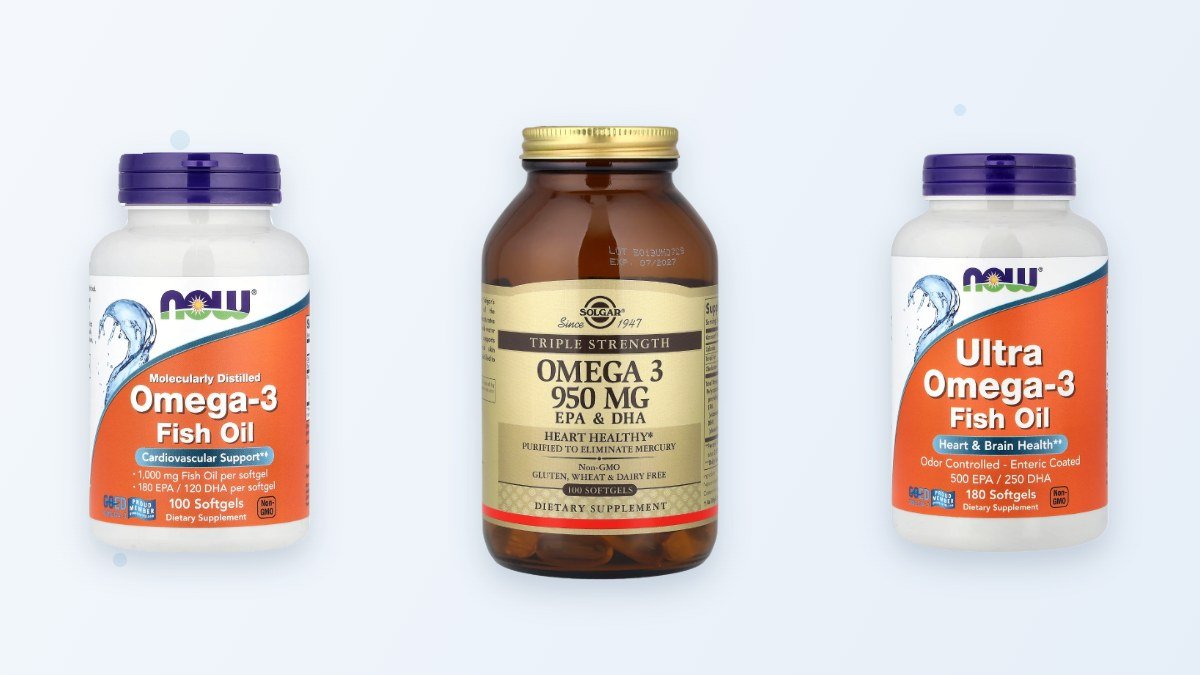
Omega-3 is one of the most popular supplements in the world, and as soon as you search for it you'll find lots of names: Fish Oil 1000 mg, Triple Strength, Ultra, Omega 3-6-9… And the question that keeps coming up: what's the difference between them, and which one should I choose? In this article, we'll break it down step by step.
What is omega-3?
Omega-3s are healthy fats your body can't make in sufficient amounts, so you need to get them from food or supplements. The two most important types are EPA andDHA, which are found mainly in oily fish such as salmon, mackerel and sardines. There's also a third type called ALA, found in flaxseed and walnuts, but the body converts only a small part of it into EPA and DHA.
And because many people in Egypt don't eat oily fish twice a week, many turn to fish oil capsules.
What are the benefits of omega-3?
- Heart: EPA and DHA help maintain normal blood triglyceride levels, which is one of the most studied benefits.
- Brain and eyes: DHA is a key structural component of the brain and retina, which is why it gets so much attention during pregnancy and breastfeeding.
- Joints: Some people notice more relief from joint stiffness with consistent use.
- Skin: Helps maintain skin hydration from within.
It's important to know that omega-3 is a dietary supplement, not a treatment, and its results show with consistent use over weeks, not from day one.
The secret is in the label: don't just look at the 1000 number
The biggest mistake people make is comparing by the big number on the bottle. A capsule labeled “1000 mg fish oil” doesn't mean it contains 1000 mg of omega-3. The number that matters is the total EPA + DHA per capsule, which is listed in the ingredients table on the back of the bottle.
Example: a regular 1000 mg fish oil capsule contains only about 300 mg of EPA and DHA, and the rest is other fish oils. Concentrated formulas (Triple Strength or Ultra), on the other hand, contain 750 mg or more per capsule, so you take fewer capsules to reach the same amount.
Types available from us and how they differ
1. Regular fish oil 1000 mg
The most affordable option, suitable as a starting point or a general daily dose. Its downside is that if you need a higher amount, you'll have to take several capsules.
Available: NOW Foods Fish Oil Omega-3 1000 mg 100 Softgels, and in a larger size: NOW Foods Fish Oil 200 Softgels.
2. Concentrated omega-3 (Triple Strength and Ultra)
These have a very high amount of EPA and DHA per capsule, so one or two capsules a day are enough. Suitable if you need a higher dose or don't like taking many capsules.
Available: Solgar Triple Strength Omega-3 950 mg, andNOW Ultra Omega-3.
3. Omega-3 with vitamin D
A formula that combines both in one capsule, useful if you spend little time in the sun. But if you already take vitamin D on its own, add up the amounts so you don't exceed the safe limit.
Available: NOW Foods Ultra Omega-3-D with Vitamin D.
4. Omega 3-6-9: do you need it?
Omega-6 and omega-9 are found in large amounts in our everyday diet (oils and nuts), so most people don't need them as a supplement. If your goal is specifically omega-3, it's better to choose fish oil or concentrated omega-3. Omega 3-6-9 is suitable if you want a balanced general formula.
Available: NOW Foods Super Omega 3-6-9.
How to take omega-3 correctly
- With food: Especially a meal that contains fat; this improves absorption and reduces fishy taste and burping.
- Consistency matters more than a big dose: One capsule every day for months is better than high doses taken on and off.
- If the fishy taste bothers you: Try keeping it in the fridge or taking it before bed with dinner.
- Read the dose on the bottle and stick to it; don't increase it without professional advice.
Important precautions
- If you take blood thinners such as warfarin or daily aspirin, ask your doctor before starting, because high doses of omega-3 may increase the blood-thinning effect.
- Stop taking it about a week before any surgery, and tell your doctor that you take it.
- If you have a fish allergy, consult your doctor first.
- For pregnant and breastfeeding women and children, the choice of product and dose should be supervised by a doctor.
The bottom line
If you want an economical option for daily use, fish oil 1000 mg is enough. If you need a higher dose in fewer capsules, go for the concentrated formulas. And always compare by the total EPA + DHA, not the big number on the bottle. You can browse all our omega-3 and healthy oils products, all genuine and imported, with free shipping and cash on delivery.
And if you need help choosing, message us on WhatsApp at 01554273505.
This article is for awareness only and is not a substitute for consulting a doctor or pharmacist.


